Silicon Valley’s Superstition and Shenzhen’s Dead End
the bubble and truth of AI hardware
I’ve been looking at AI hardware lately. My feelings are complicated.
It’s a mass delusion spanning the Pacific — everyone confused and high and hungry at the same time.
If you pull apart what’s actually happening, you find two totally different kinds of wrong: Silicon Valley’s “bookworm arrogance” and Shenzhen’s “opportunist hustle.”
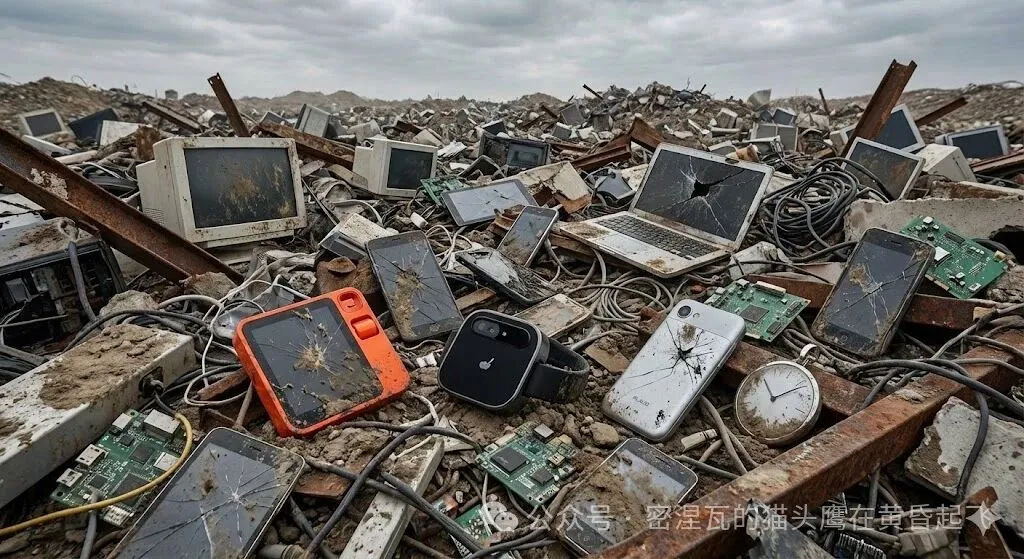
01 — Silicon Valley’s Superstition: Trapped in Chat Boxes and “Large Model Chauvinism”
Let’s start with the Valley.
The problem is that this entire AI wave is run by researchers. Brilliant people, sure. But when it comes to making products, they have zero instinct for what real humans actually need.
Look at ChatGPT. Years in, and what is it? A chat box.
Only recently did ChatGPT Desktop ship a “background listening mode” — which was the first real attempt to break out of the text box.
Google’s Gemini is even more infuriating.
Google owns Android and Chrome OS. It could own the whole stack. Instead, it can’t even be bothered to build a proper desktop app — it just shoves AI into a browser tab and calls it a day. That’s not a product. That’s actively cutting off any chance of AI taking over the OS layer.
This kind of product laziness — and yes, insiders say it’s turf wars too — has turned Google into a beggar sitting on a gold mine.
Google has all our data. Calendar, docs, email, maps. It should be the world’s most omniscient butler.
Instead? It keeps everyone chained to that empty search box.
It literally holds every piece of your life’s puzzle, but instead of assembling it, it makes you hand over the pieces one by one like an idiot, asking “hey, where does this one go?”
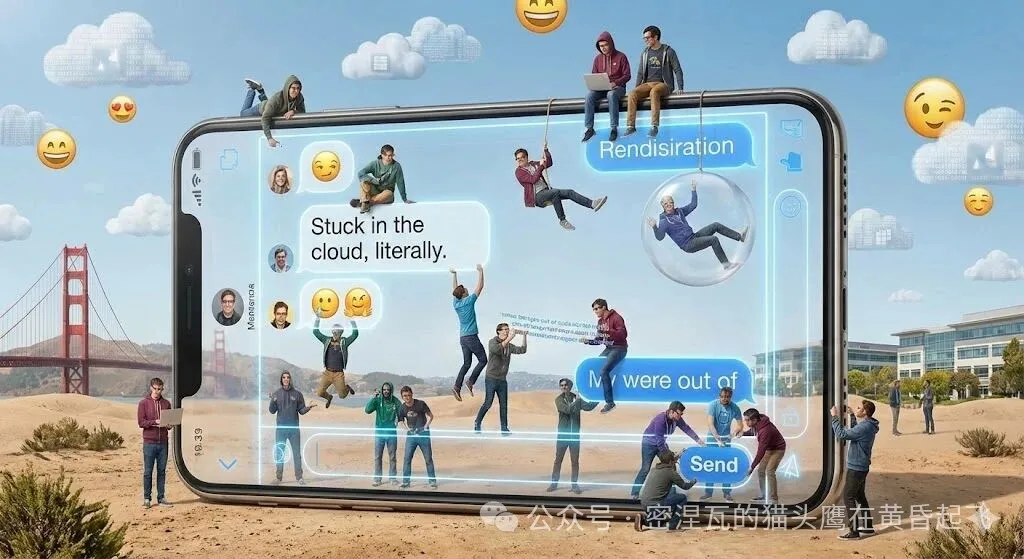
Beyond the software laziness, the Valley has an even scarier disease: “Large Model Chauvinism”— the belief that the model is everything and nothing else matters.
Take the AI robotics crowd. A ton of these founders can’t even explain basic motion planning or dynamics.
They believe Model > Physics. They think you don’t need to understand mechanics, don’t need control theory — just run end-to-end RL, maybe have the LLM orchestrate, and the robot figures everything out.
It’s honestly a bit pathetic: a model that can’t even figure out where its own center of gravity is, and they want it to overturn seventy years of Newtonian dynamics research. That’s not “first principles thinking.” That’s contempt for basic engineering.
02 — Shenzhen’s Dead End: AI-Coated Drumbeating
Now turn your eyes to China. It’s even more surreal.
If Silicon Valley “doesn’t understand products,” Shenzhen has a whole army of newcomers who either don’t understand and fake it, or understand and pretend they don’t.
Over here, AI hardware has been boiled down to a brutally simple fundraising formula:
The first type: drowning in fake metrics.
Stuff a large model into a toy, call it an “education revolution.” Shove it into a supply chain pitch, call it a “next-gen compute platform.” Their real talent isn’t building products — it’s manufacturing ghost data.
Here’s a real data point, as an industry benchmark.
When we were building the Dali Smart Lamp at ByteDance, we went all in on home education. We saturated Douyin with content, got every mom and auntie talking about it, ground through product and marketing until our NPS (Net Promoter Score) hit iPhone-level territory.
The result? Over one million units sold.
Think about what that number means. If you’re in this space, someone you know owns one. You can actually see people using it. People actually recommend it to you.
Now look at all those AI hardware companies on the market casually claiming “millions of units shipped.”
Show me the receipts. Beyond pitch decks and press releases, beyond inventory rotting in channel warehouses — has anyone actually seen these things in the wild?
It’s the oldest trick in the book: stuff the B-channel with inventory, pretend that’s C-channel sell-through, and pump the primary market with fake traction. If you know, you know.
The second type: the mediocre “incrementalists.”
Not everyone in Shenzhen is a grifter, to be fair. There are genuinely practical people putting AI into voice recorders, translators, learning tablets.
Are these products fake? No. Do they work? Sure, better than before. Maybe 50% more efficient.
But their problem is: small ambition, low ceiling.
This isn’t “AI-native hardware.” It’s plugging AI into old devices. Useful for niche groups — journalists, students, lawyers — but niche is all it’ll ever be.
The sad part: a lot of these people clearly just built “a better tool,” but they can’t help themselves — they jump up and scream about “disrupting the iPhone.”
If all you’re doing is patching the old experience, you’ll be stuck in a crack forever.
This is taking mediocre hardware, coating it in a layer of AI sugar, and force-feeding it to an anxious market.
03 — The Real Opportunity: Evolve and Execute, Not “Passive Chat”
So where should real AI hardware actually go? Glasses? Earbuds? A ring? I don’t know, and the form factor isn’t the point.
1. Ditch “interaction fundamentalism” — AI needs omniscience
A lot of hardware founders have fallen into a weird trap: to prove their thing is “AI hardware,” they absolutely must kill the screen, kill the keyboard, and go all-in on voice.
This is a misunderstanding of efficiency.
Voice has the convenience of voice. Vision has the efficiency of vision. A mouse and keyboard inputting complex commands is still an irreplaceable “high bandwidth” tool. Ditching one for another is pointless.
Real AI hardware should be multimodal and inclusive. It should be a greedy “information sponge” — sucking in data from your voice, your screen, your keyboard, even the ambient noise around you.
AI shouldn’t be picky about how it “hears” you. It just needs to understand you.
2. From “guessing what you like” to self-evolution
Current AI — including every recommendation algorithm out there — tops out at “knowing you.” It figures out you like pretty girls, so it shoves pretty girls in your face.
But the core capability of real AI hardware should be “knowing itself.”
This is the scariest and most exciting frontier: Meta-Cognition.
As Wu Enda recently demonstrated: a “reflective” AI agent whose performance can beat a vanilla large model orders of magnitude bigger (GPT-3.5 + Reflection > GPT-4).
True intelligence isn’t just “knowing the answer.” It’s knowing when it’s wrong, and fixing itself. On the software side, it debugs its own code, fills its own feature gaps. On the hardware side — imagine: in the physical world, it can’t reach something? It realizes “my arm is too short,” then controls a 3D printer to fabricate an extension and mounts it on itself.
This is the real endgame:
Software: we’re going from Copilot to Vib Coding (fully autonomous programming).
Hardware: the future is Vib Design — maybe even Self Design.
Before we get to “AI designing its own hardware form factor,” arguing about whether this plastic shell should be round or square feels laughably small.
3. Stop performing. Start solving problems.
Finally, the most practical layer: execution.
The only test for whether a piece of AI hardware has real value: is it performing, or is it working?
- A robot that dances is cool, but commercially it’s a performance. If a robot can wash my dirty dishes, mop my floor — that’s meaningful.
- A toy that chats with your kid for an afternoon is killing time. If it can teach your kid a real skill, take them exploring the world — that’s education.
- And those heavily-funded AR navigation glasses — please, who needs an arrow projected in front of their face to walk to Starbucks? Is pulling out your phone and glancing at it really that hard?
This is called using a hammer to find nails.
Real AI hardware isn’t AI for the sake of AI. It’s hardware that can call on tools, drive projects, and solve the physical-world problems that old hardware never could.
Conclusion
The AI hardware scene right now feels like the night before the iPhone launched — the darkest hour.
Silicon Valley and Shenzhen alike: blind men groping at an elephant, knockoffs everywhere, bizarre concepts flying in every direction.
But I’m still optimistic. Because bubbles pop, but demand is forever.
We don’t need another chatbot pet. We don’t need a fancier voice recorder. What we’re waiting for is something that can evolve on its own, sweep my floor, truly integrate digital resources into the physical world. That day isn’t far off.
Until AI can actually help me watch the kids, do my taxes, and book my flights — stop trying to sell me storytelling plastic boxes.
Don’t insult our intelligence with chatty e-trash — and don’t insult Steve Jobs while you’re at it.